
Lesson 13 – How to Break into the Market Part 1
In the last couple of lessons of the master course, we will be focusing on the business of being an illusionist and how to get started booking shows.
You will learn how to build a career as an illusionist but is designed to get you on your feet running. It is a guide to the first steps you should take to starting booking commercial gigs.
UNDERSTANDING THE BUSINESS OF SHOW BUSINESS FOR ILLUSIONISTS
From a business perspective, an illusionist must understand that he/ she must approach the business very differently from other magicians. Selling an illusion show for illusionists has nothing got to do with the technical skills or ability of an illusionist versus a magician. But an illusionist must be aware of the commercial aspects of running an illusion show that makes it necessary for an illusionist to have a different business model.
First, consider the costs of an illusion show compared to other magicians:
Generally, an illusion show costs much more to produce than a regular magic show, especially if you compare the cost of production with a close-up magician or kids show magician. So, the capital outlay for the illusionist is generally much higher.
Continual reinvestment back into the show or additional capital injection is also higher in order to build the show, update it or make it better.
The cost of staging an illusion show is higher than most other magic shows because you require assistants, crew and technicians to run the show. A smaller magic show can be performed solo or with just one or two assistants. The transport of the props in trucks is also an additional cost.
An illusion show has a much longer set-up time than other magic shows. Loading in, physically assembling the illusions, working on lighting design and backstage management can take a couple of hours. In comparison, a stand-up magician, kids entertainer or close-up magician can set up in less than 30min.
Due to the scale of an illusion show, it is unlikely you can do multiple illusions shows in a day, unless it is in the same venue. Other magicians can take on multiple different shows in different venues and for different events if the distance between shows is close enough.
Illusion shows have more logistic and venue requirements than other magic shows. You need a stage large enough to accommodate the show (often with side wings), the audience seated in a specific arrangement or at a certain distance and the ability to load in the illusions into the performing venue. Most other magic shows can adapt their show to the venue and performing environment.
There are also offstage costs that illusionists incur that other magicians do not have such as storage space and illusion maintenance costs.
After reading all this, it might seem silly to be an illusionist from a business perspective. However, there is a commercial positive flip side of being an illusionist.
Due to the ability for an illusionist to fill a stage, create scale and production value as well as potentially entertain a larger audience, clients generally regard illusion shows as higher value shows than other magic shows. This means, they are generally willing to pay more for an illusion show.
This potentially allows a business-savvy illusionist to command a premium fee to cover all his costs and yet still make a decent profit.
So, as you move into developing the business of being an illusionist, bear the above in mind.
If you intend to be a professional illusionist, you need to start thinking like a commercial creative artist or creative entrepreneur. I have included my eBook “Think Big (Money)” as a download for this lesson. The approach I outline is especially pertinent to illusionists (since this is the very approach I built my career on).
HOW TO BOOK SHOWS
At the most basic level, being a successful entertainer means being able to make a decent living performing with a reasonably comfortable lifestyle. While there is no formula for success in show business, there are ways to give you a better chance at being successful.
As a new illusionist, here are three simple steps to how to book (more) shows:
Have a Quality Show or Act
A strong product (show or act) is essential for an entertainer to build a successful career. Offering a solid act or show to the market is the most fundamental aspect of being a successful entertainer.
This might seem obvious, but some entertainers are oblivious to how good (or bad) their product actually is.
While it is still possible to book shows with a lower quality product, you will either need to offer a low price or a lot of extra value in order to book enough shows to make good money.
One word of advice I will offer is to always benchmark yourself with entertainers in one market/ level above you, not just with entertainers in the same market/ level as you.
If you compare yourself with entertainers at the same level as yourself, it is easy to get complacent and comfortable. Benchmarking yourself with entertainers a level above you will drive you to improve and grow as an entertainer.
Market Your Show or Act Well
Once you are confident that you have a good product, you need to employ marketing tools and tactics.
Marketing tools refer to the techniques, methods and platforms you use to promote and sell your
product and brand. Marketing tactics refer to how you use your tools.
Some marketing tools include:
- Identity (Logo, Promo Photos,
- Business Cards, Slogan, Moniker etc)
- Online Marketing (Website, Blog, Video Platform, Google AdWords etc)
Social Media (Facebook, Twitter, Instagram etc) - Agents, Show Bookers and Talent Managers
- Event Producers
- Media & PR
- Advertising
- Direct Marketing
- Exhibiting at Trade Shows
- Referrals and Word of Mouth Marketing
- Business Partners
- Showcases
We will be discussing many of the above tools in this week’s lessons.
Spend time, effort and money on each marketing tool and monitor which produces the best results. Focus your resources on the tools and tactics that work and continue to monitor the results.
Keep in Touch with Existing Clients and Build Relationships with New Clients
Repeat clients are the most “low-cost” clients as you spend the least to acquire every new show from them. There is also a high chance that they will refer you to friends or business partners. Word-of-mouth marketing is also a very strong form of marketing as it is low-cost but very powerful. So, keep in touch with your existing clients through fairly regular emails or send postcards when you travel. Update them on your high profile projects or if you have new shows.
If you follow the above steps diligently and work hard in each step, you will put yourself in a good position to book (more shows).
HOW TO BREAK INTO THE MARKET PART 1
In these two lessons, we will discuss the basic promotional tools you will need to break into the market. These include:
- Photographs
- Video(s)
- Profile
- Show Program
The first two basic promotional tools you require are photos or a video(s).
I spend an entire lesson on just discussing photos and videos (more in the next lesson) because these two tools are so important.
Invest your time, money and effort in your photos and video because they will go a long way. Good photos and videos will sell your show and convince clients to book you. Do not cut corners and try to get cheap quantity over more expensive quality. The success you will get booking shows is directly proportionate to the quality of your promotional material.
Photographs
Photographs of you and your act (i.e. you in action) are very important, as it is the first impression your prospect will have of you before watching your video. If you do not have a promotional video, photos are a must.
You need two types of photographs:
1) Promotional/ Publicity Shots
2) Live Performance Photos
Promotional Photo
Your promotional/ publicity photo/ headshot/ glossy is the main photograph that you will use for promotional purposes. This single photo should convey your style and feel of your performance character/ show.
It takes a lot of thought to think of the concept of the shot. The concept includes the setting, styling, attire, pose and the composition of the shot. You have a choice to include props in the shot, although it should enhance, and not distract from the focus of the shot, which is you.
Whatever you decide, the shot must be reflective of your show/ character and sell it. Also, if you are taking a shot with props, ensure that those props are used in your show.
Avoid clichéd shots of holding a fan of cards or holding a magic wand and top hat, unless you are doing a deliberate satirical photo. As a modern illusionist, think of unique poses and concepts that make you stand out from others.

It is better to spend hours getting one perfect shot than getting 20 mediocre shots. You really need just one promo photo.
Since 2008, I have not printed any of my photos as clients have only requested for high resolution digital copies. In most cases, if photos are used for print purposes, clients take my digital photo to incorporate it into their own posters or promotional material.
Performance Photos
While a promotional shot sells you to the client, it is the performance shots that sell the show to the client.
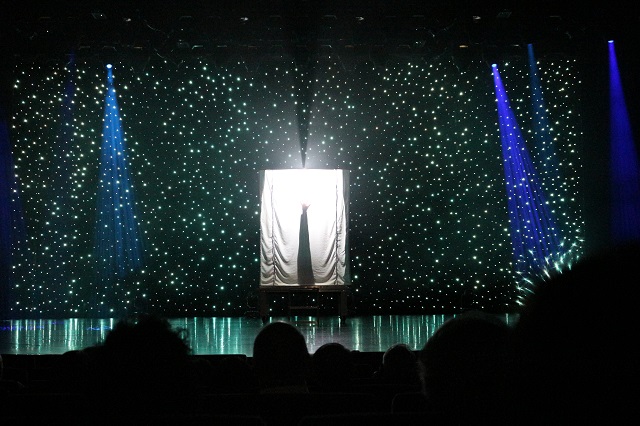
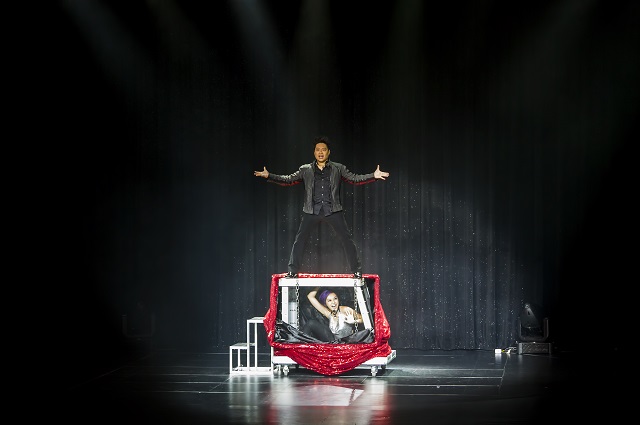
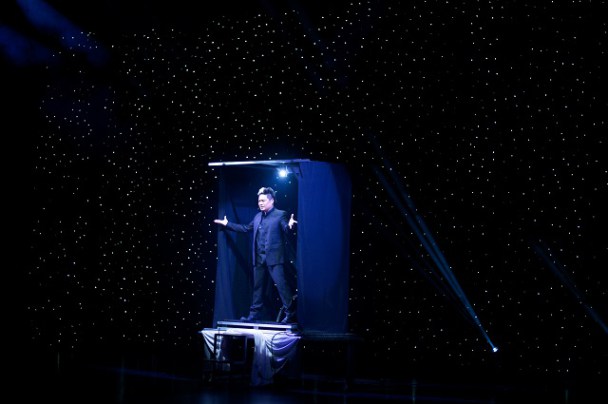
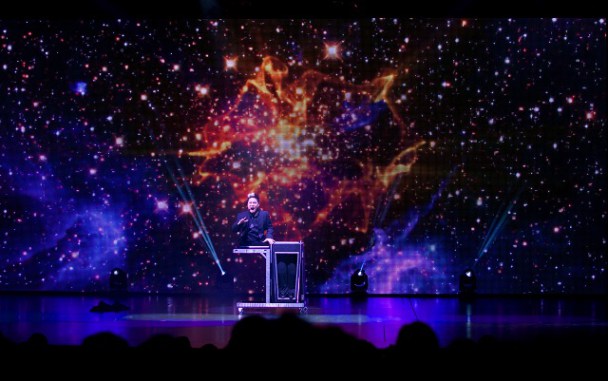
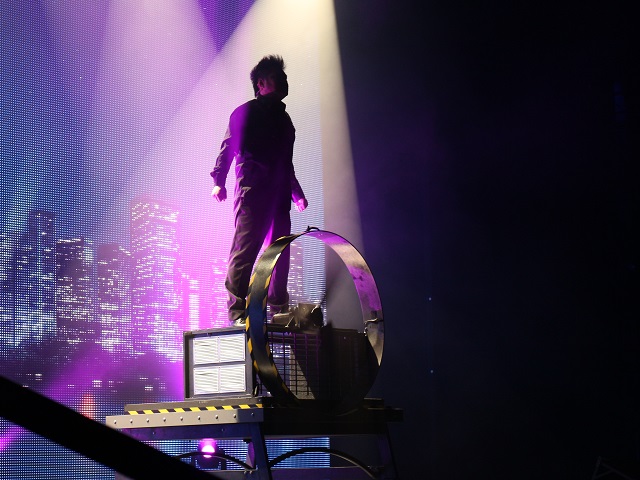
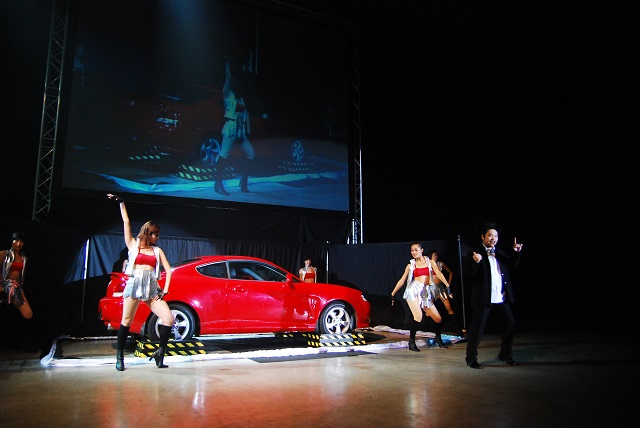
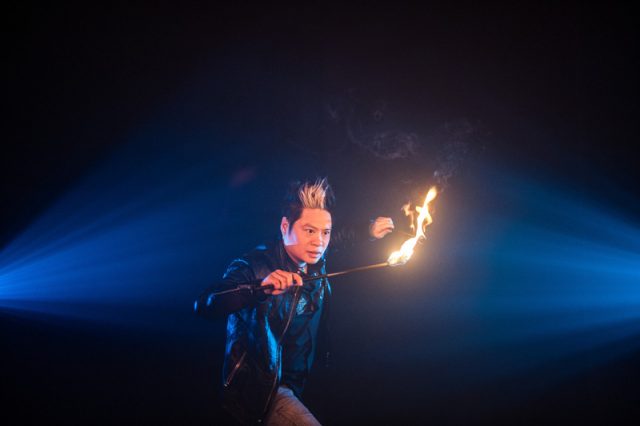
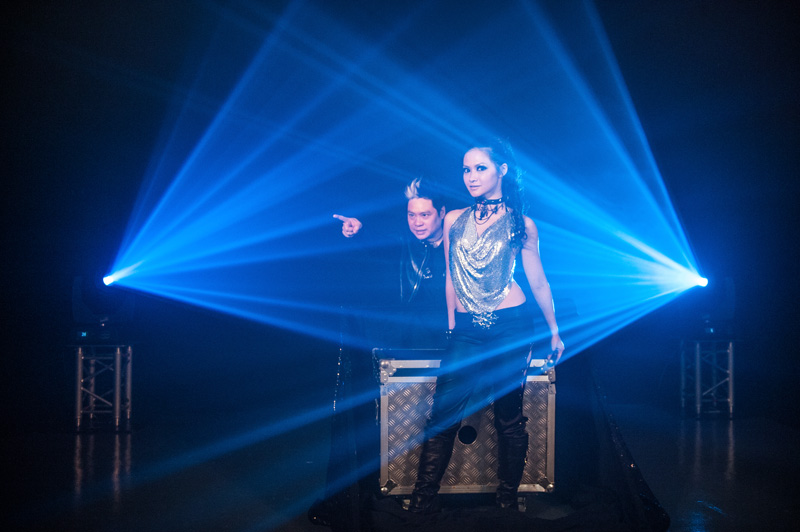
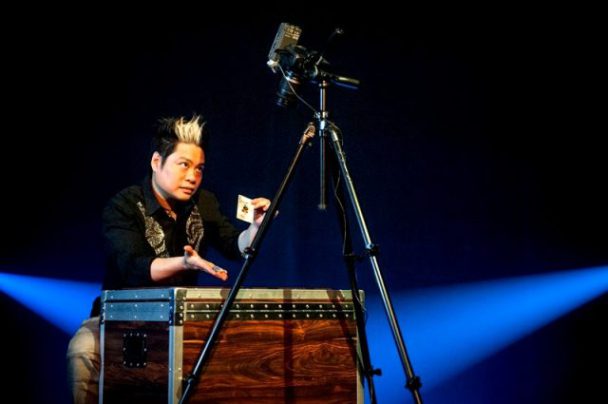
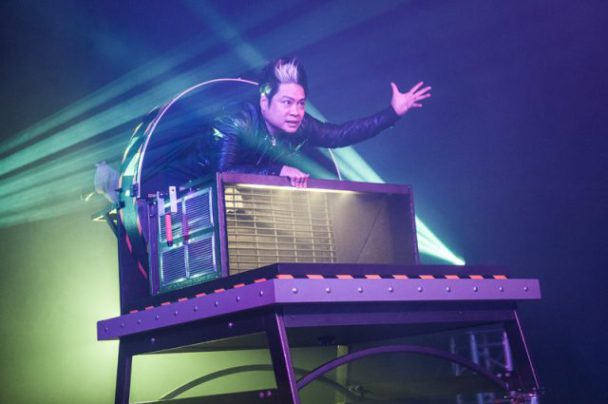
The live performance shots should also be the best you can get of yourself performing in your targeted market. The shots must make you look good and if you cannot find shots that look great, it is better not to put any performance photos in until you get suitable ones.
To find out how to “cheat” and get great performance photos without performing a show, be sure to watch this lesson’s video lesson. All the “performance” photos you see below were not taken on a live stage but in my rehearsal studio.
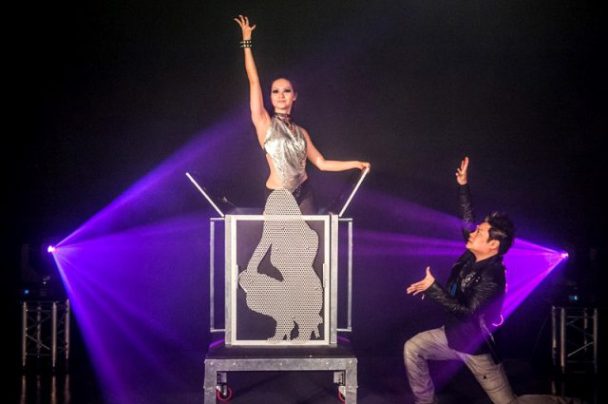
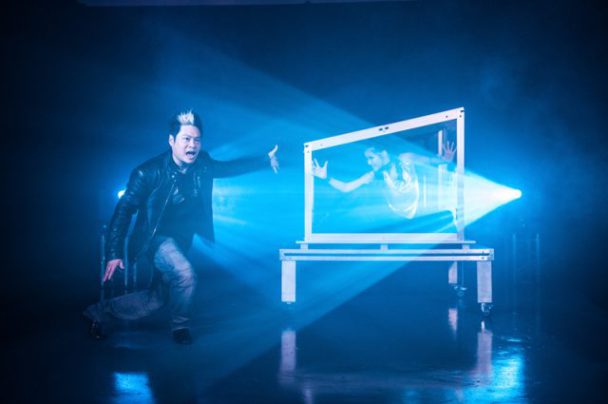
Videos
Having a video definitely will increase your chances of getting booked. Magic is a visual medium and most people cannot visualize an effect or illusion by pure written text. Photos and a short description help but a video almost sells the show itself, IF the video is good.
However, if your video does not make you look good, you are better off without showing off a video.
We will discuss the different types of videos that you need in the next lesson but here are some things to bear in mind when planning your video.
The ideal setting would be to capture your show with multiple cameras (at least two) and also capture a clean audio track of your microphone track if you are using one. This is so that you get a clean recording of just your speaking. This is important if you intend to showcase any talking acts in your video.
If you are not familiar with video shooting and the equipment required, my suggestion is to engage a professional cameraman. You could also engage freelancers or final year students studying film production.
Brief the cameraman on your needs and explain that you want to capture your show in its entirety without breaks. There should be one main camera that is front and center of the stage so that it captures the entire stage and the first one or two rows of the audience (you want to show that you are performing for a live crowd).
The second camera should be a close-up side angle that tracks your movements. The footage you get between these two cameras will allow for the editing of video. It is very tough to edit the footage from just one camera.
If you have the luxury of more cameras, you can have one from the other side of the room and one camera purely focused to capture audience’s reactions.
I also like to use a Go Pro and mount it onto the front of the stage floor. This gives a unique low-angle shot of the stage and is good for large stages.
If you do not have shows booked yet to shoot a video, I explain a cheat in the video lesson on how to create a credible video teaser.
In the next lesson, we will explore the different type of promo videos you can created as well as your promo kit.
DOWNLOADS
Bonus Audio Content: How to Be a World Class Illusionist

