
LESSON 10: Audio Tech & Music Design
AUDIO TECH FOR ILLUSION SHOWS
Sound is essential for any show and an illusion show is no different. Sound (and lighting) support can help to make or break the show regardless of the quality show itself.
In my opinion, of all the basic technical requirements, your sound is the most important. You could possibly perform a decent Event Magic Show if you have no special lighting or effects. But, it would be impossible for you to perform a show if you have no sound.
‘Audio’ covers your microphone, music and any special sound effects that you might have. The sound quality and volume of your audio output(s) is critical to the success of your show.
SOUND SYSTEMS
A sound system or sound console is generally made up of several components:
- Mixer with multiple channels for various audio inputs
- Microphone Systems
- Amplifier
- Music Playback Device
- Speakers
Although I am familiar with elementary audio engineering for event set-ups, this is not the book to delve into this subject. I strongly recommend that you take a basic audio engineering course or spend a day with a sound technician or audio engineer and have him run through the different components of a basic sound system. Have him teach you how to make basic connections between the audio components (microphone systems, music players) and the mixer. Learning to equalize audio levels by adjusting the ‘Gain’, ‘High’ ‘Mid’ and ‘Low’ levels is essential
The basic sound systems that you would likely encounter include:
- Mobile Set-ups
- In-House Systems
- Portable Self-contained Systems
Mobile Set-ups
This will be the most common set-up that you will see at events. The set-ups will range in elaborateness based on the size of the events. For small events, an 8-channel audio mixer board will be more than sufficient to cover basic sound requirements. For larger events, expect a more extensive set-up with a larger mixer board, amplifiers, power amps and multiple wireless microphone systems.

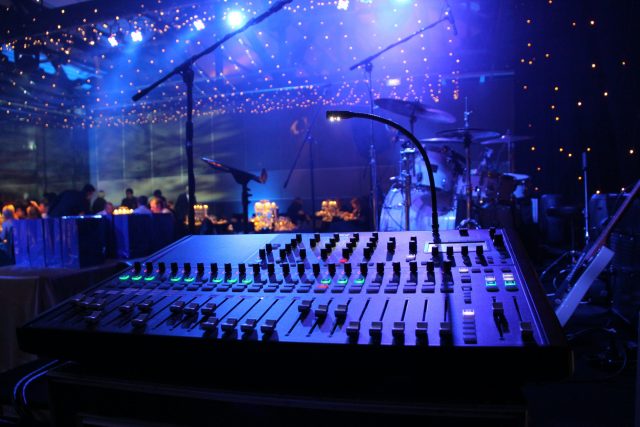
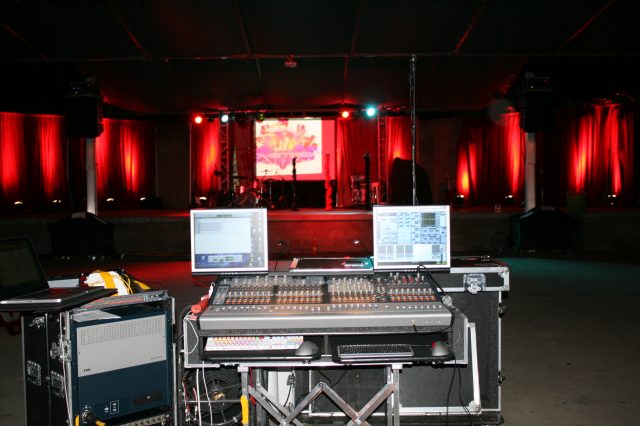
The mobile set-ups or sound consoles are often set up next to the stage, adjacent or right behind the event venue overlooking the audience (concert-style).
In-House Systems
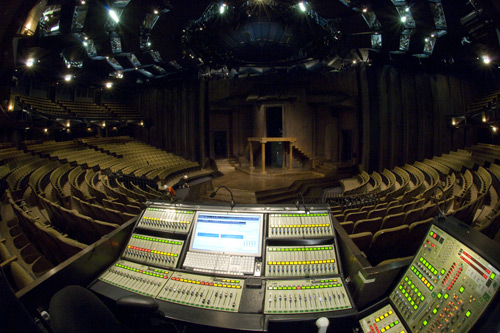
In-house systems are installed systems in venues such as hotels, clubs, theatres and schools. The quality of these systems ranges from poor to fantastic. If you are performing at a low-end social club, you can expect a weak system, but if you are booked to perform in a world-class performance arts center or showroom, you are generally guaranteed a state-of-the-art system.
Portable Self-contained Systems
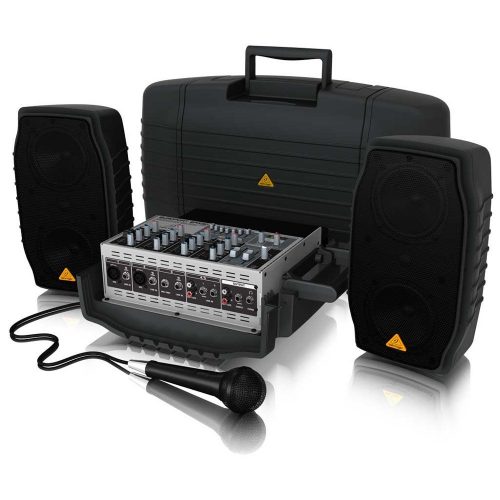
While these systems are inadequate for large events, they are ideal for small or informal events where you would prefer to be entirely self-contained. Sound quality is fair but good enough for these events. School and street festival performers typically favour portable self-contained systems. There are several brands in the market that offer portable system. One of the most popular systems among performers is the Fender TM Passport System. Visit www.fender.com for more info.
Music
Currently, you really only need to prepare your music in two formats:
- CD (Although this is fast phasing out)
- Audio Files on a Flash Drive
If you are booked to perform an illusion show, the event or venue will play your music through a CD player or a computer system. It is highly unlike they will be running off obsolete technology like cassette tape or MD.
For CDs, ensure that your music is burnt as audio files and not digital files.
For digital files in a flash drive, ensure that you label all tracks properly and number the tracks. This ensures they will come up in the right order on the computer system. Be sure to label the titles of the files under “Details” after you right click the file and click on “Properties”. Do not just rename the track under “General”. Some systems read the “Details Title” and if you do not label them correctly, the order of your music will be all jumbled up.
MICROPHONES
Using the right microphone and learning good microphone technique are essential if you do any talking in your act. In this section, we will look at different microphones, wireless systems and offer some tips on handling the microphones.
There are a few standard styles of microphones on the market:
- Hand-held
- Lavaliere/ Head Set
Hand-held
The basic microphone is the hand-held microphone. They can either be wired or wireless.
Wired microphones are typically found in all halls, theatres, meeting, and banquet rooms or in clubs used by music bands. The sound quality is usually excellent (of course, dependent on the sound system, quality and length of the microphone and cable). The restriction with this microphone is that the length of the microphone cable confines your movements. You also have to be careful not to trip or let invited volunteers trip over the microphone cable.
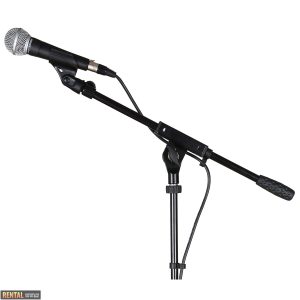
Wireless microphones are the current standard for any special event supported by a professional sound company. Being wireless, it is very convenient to use and allows you to be highly mobile on stage. Some performers find wireless microphones unreliable due to the fact that they run on radio frequencies and are prone to disruption and feedback. However, wireless technology is now so advanced that this is hardly a problem if you use a good brand microphone system and are supported by a decent sound system.
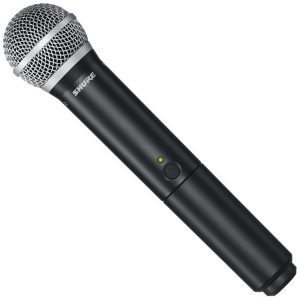
In terms of being ‘hands-free’ to perform your routines, with both the wireless and the wired handheld microphones, you will need to use either a microphone stand or a microphone holder that goes round your neck.
Microphone stands are usually readily available if there is a microphone, but don’t assume. Some places may have the stands in storage and need to be requested for in advance. If a sound company is supplying the equipment, you need to ensure they make provision for one. If your act requires a specific type of microphone stand and holder, bring your own. They pack relatively small (or at least thin) and are inexpensive.
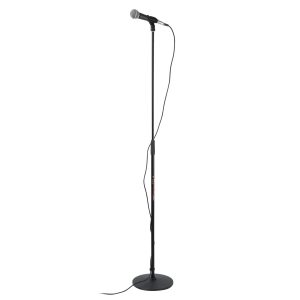
If you are using a microphone stand, you must practice your act with a microphone stand or at least with a mock up. This is because a microphone stand can be very restrictive to your movements and you must work out the choreography of managing your props and performing while keeping your mouth to the microphone.
Another ‘hands-free’ solution is to use a professional microphone holder. I have seen several designs on the market, each with different pros and cons. You have to see which one suits you the best. Generally, the more discreet the holder, the less ideal the position the microphone is held in. The more cumbersome the holder, the better position it is in.
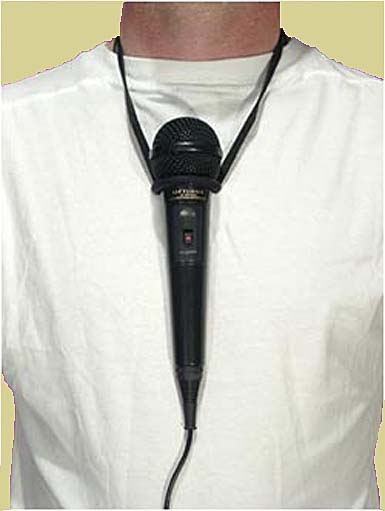
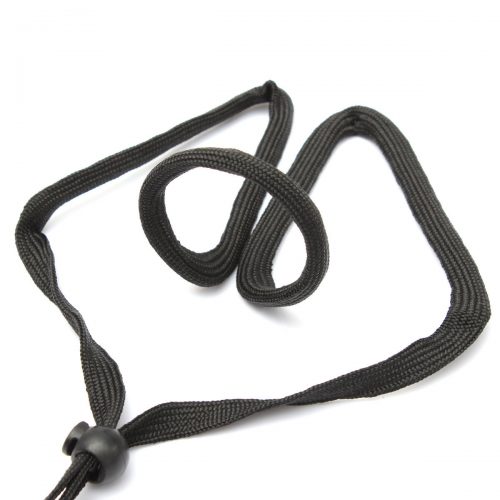
Here are a few considerations to bear in mind:
- Make sure that the holder can hold the microphone securely and straight up. It should not shake around too much when you walk or move around.
- Make sure the holder you are using distributes the weight of the microphone evenly.
Lavaliere/ Headset
These wireless microphones are very compact units that consist of a small transmitter and a small microphone. The transmitter (about the size of a deck of cards) is usually placed in your back trouser pocket or clipped to your belt.
For the lavaliere, the microphone is clipped onto your tie or collar with a wire running under your jacket/ vest/ shirt to the transmitter pack clipped to your belt.
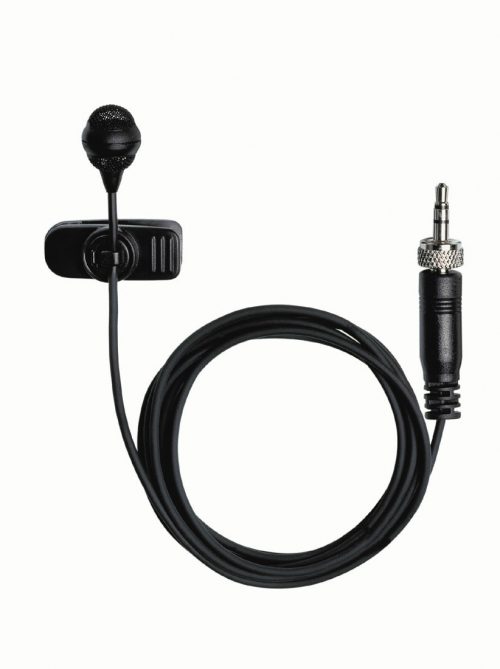
In the case of the headset, the microphone is worn over your head, over your ears and the mouthpiece is positioned directly in front of your mouth. A flexible wire or elastic band keeps the headset in place. As with the lavaliere, a wire will run from the back of the headset to the transmitter.
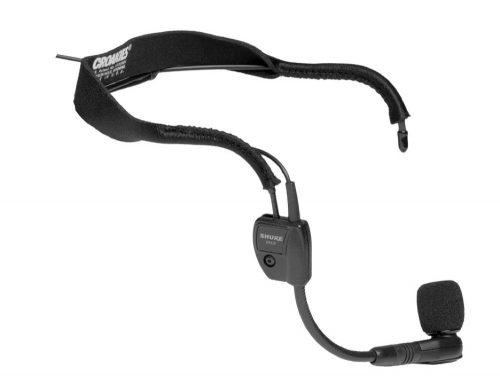
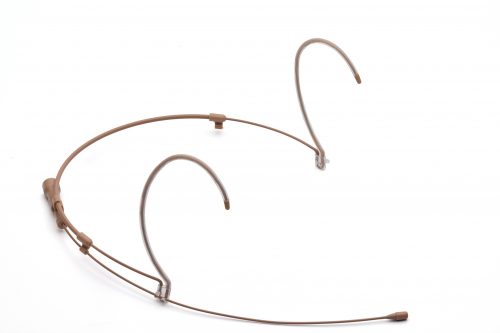
Both lavaliere and headset microphones give you tremendous mobility and complete free use of both hands.
Wireless Microphones Systems
Microphones are only one component of the overall microphone system. A microphone system is made of three components: Microphone, Transmitter and Receiver.
The microphone and transmitter are worn on your body. In the case of the wireless hand-held microphone, the transmitter is built into the handle/ body of the microphone. The receiver is connected to the sound system’s mixer board via a XLR channel. The receiver is kept at the console while the performer holds onto the microphone and receiver.
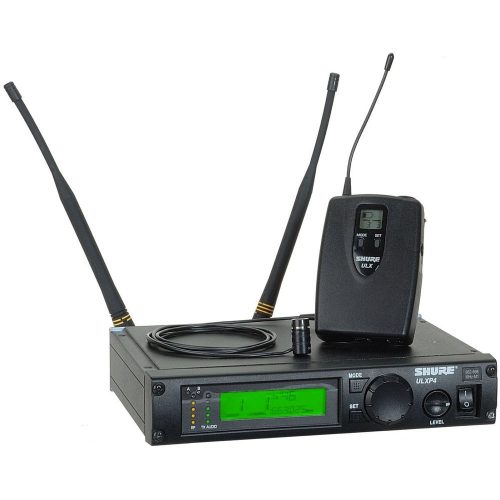
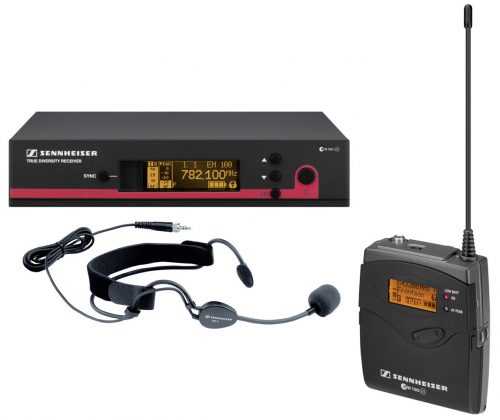
Wireless microphone systems are the standard for any professional event or concert. With the current advancement in wireless technology, wireless systems are highly dependable with great sound quality.
In general for wireless microphone systems, the only occasional problem is the possibility of distortion/ breaking up of sound, feedback or interference. The ways to minimize the above problems are to:
- Use a good microphone system that runs on a high frequency. With all the mobile phones and radio channels around, it is very easy to have a cross over if a low range frequency is used. Higher end models have a ‘scan’ function that will scan the location for free channels uninterrupted by other signals. The latest technology includes systems with a dual pilot tone that ‘locks’ out other devices even if they are transmitting at the same frequency.
- Check if the speakers are of good quality and if they have a magnetic seal. If not, be sure not to go too close to speakers and never walk directly in front of the speakers. If the ‘Gain’ level of the mixer is too high or if ‘DB’ level of your transmitter is too high, strong feedback will occur. Turn the speakers away from the stage if the speakers are too close.
- Test the microphone before your act or before the event. Clip it into place, as how you would use it in actual performance, and walk around the stage. Find out where the ‘problem’ areas lie and stay away from them during performance.
MUSIC DESIGN FOR ILLUSIONISTS
Music is an essential component of any show. A magic show, regardless of the scale of the show, is no different. Choosing the right music for your acts is critical. You need to match the tempo, music, feel and mood of the music to the illusion performed.
The late-Gary Ouellet covered this subject in depth in his excellent book & companion tape ‘Music for Magicians’. I highly recommend this book/ CD set and it is still available from Camirand Academy of Magic. This book will give you sound (pun intended) advice on sources of music and choosing the right music for magicians. It will also walk you through a simple music & sound effects edit session.
While there are multiple sources to learn basic editing and music production, Gary’s book is tailored specifically for magicians with magic examples, making it easy to relate to. This course was released in the early-90s so the discussion on technology is dated but the fundamental principles are still relevant.
At the most fundamental level, music is used to accompany an act to make it interesting and to communicate the performance feel of the illusion. In this case, music is almost used as an audio backdrop to the act.
At a more sophisticated level, music is an integral part of the act. The music becomes just as important as the illusion itself. With a well-designed piece of music, performed with choreography and precision timing with an illusion, the music enhances the illusion and can also be used to highlight magic moments within an illusion. The music also no longer just serves as a backdrop but helps guide the audience through the narrative of the illusion and gives the audience distinct applause cues.
An example of how music can be used can be seen in an illusion I present dubbed “Impossible Cut”.
Music can also be used to evolve sentimental emotion which is a great state to be in to experience wonder that good magic can create for an audience. Copperfield is a master of matching such music with many of his illusions like “Flying”, “Snowing” and “Portal” to name a few. In the example below, I choreographed a close-up act to a great piece of music to enhance the routine.
Here are some considerations to make when selecting music for your acts:
- Your music style should not only match the acts performed but also the feel of your show and your performance style. If you perform a classical act in tails, a techno remix of a hip-hop track will most probably be an amusing mismatch.
- Avoid overused music pieces that are clichéd and overly familiar, unless you are doing a spoof or themed illusion that must use the track for a logical presentation of the illusion.
- Avoid using signature music from signature acts from other (especially) well-known magicians. Performing a dove or card act to Vivaldi’s ‘Four Seasons’ would be unwise and disrespectful to Lance Burton. The same goes for An Ha Lim’s use of “Explosive” by Bond for his card manipulation act. Also avoid using music used by well-known illusionists such as Copperfield or Hans Klok.
- Just as you would create variety and texture in your performance material, be sure to do the same with your music.
Having the same monotonous break-beats of a modern soundtrack can get stale if used throughout a 30-minute show. Likewise, even bright symphonic classical music for every act can be too much.
It does take time and a bit of creative evaluation to select a repertoire of music that is varied but yet has a consistent feel to harmonize with the style of the show.
One way to ensure a consistent sound of all your music but still retain variety is to use different styles of music tracks with the same kind of orchestration. So, if the main illusions of your shows are performed to rock music, the rest of your show music can comprise of tracks of different music styles but with the orchestration made up of electric guitars, drums and keyboards.
Having written the above, having one piece of music that is completely different in your show can also be great to highlight an act and great a completely different mood in the show. This is a useful tool to add theatrical texture to your show.
The late-Joanie Spina offers great advice on music selection for magicians and gives many examples in her excellent video set ‘Getting Your Act Together’. This video is required viewing for all stage magicians, especially illusionists and their assistants. Bear in mind, this video was produced in the mid-90s and it does feel dated in production as well as the style of choreography; however, Joanie’s fundamental advice is still very sound. However, you may need to do some hunting to find her DVDs now.
Sources of Music
Music production for your show starts with finding the right music for your acts. Briefly, your source of music can come from:
- Commercial Music. This offers an extensive range of the highest quality music but will require royalty fees for public performances. It includes everything from classical music to the latest top ten hits to movie soundtracks. Commercial music is music that are released as albums or singles in the commercial market space such as at mainstream music stores or on i-Tunes.
- Royalty Free or Buy-out Music. With this source of music, you are not limited to the use of this music as all royalties are paid upon purchase. However, the quality of music can vary tremendously and finding the right music may take time. You can do a search on-line and find musicians or companies that sell royalty-free music.
- Production Music. This is designed for use in multi-media productions, commercials, television and film. The allowed royalty-free usage may be limited but production value and quality of music can be high. You can do a search on-line and find musicians or companies that license production music.
- Custom-Composed Music. This is the most expensive source of music but offers you custom soundtracks that are designed specifically for your performance material that no one else in the world would have. You can look for composers who create music by asking for recommendations or doing a search on-line.
I personally use and have used all the above sources with great success but you will have to research and invest in what you think is best for you.
You can listen to a sample of music I currently use in my show (2014 till date) below via online stream or here:

